

Tirzepatide peptides represent a groundbreaking advancement in metabolic health management, combining dual incretin receptor activity to address weight loss and glycemic control simultaneously. As research continues to expand throughout 2026, these peptides have emerged as a powerful option for individuals seeking comprehensive metabolic support. Understanding how tirzepatide peptides function, their mechanisms of action, and their potential applications provides valuable insight for those exploring cutting-edge peptide therapies.
Tirzepatide peptides operate through a unique dual agonist mechanism that targets both glucose-dependent insulinotropic polypeptide (GIP) and glucagon-like peptide-1 (GLP-1) receptors. This innovative approach distinguishes tirzepatide from traditional single-receptor therapies, offering enhanced metabolic benefits.
The GIP receptor activation component works by stimulating insulin secretion in response to nutrient intake while potentially influencing fat metabolism and energy storage. Meanwhile, the GLP-1 receptor component contributes to appetite suppression, delayed gastric emptying, and improved glucose homeostasis. Together, these mechanisms create a synergistic effect that addresses multiple pathways involved in weight management and metabolic function.
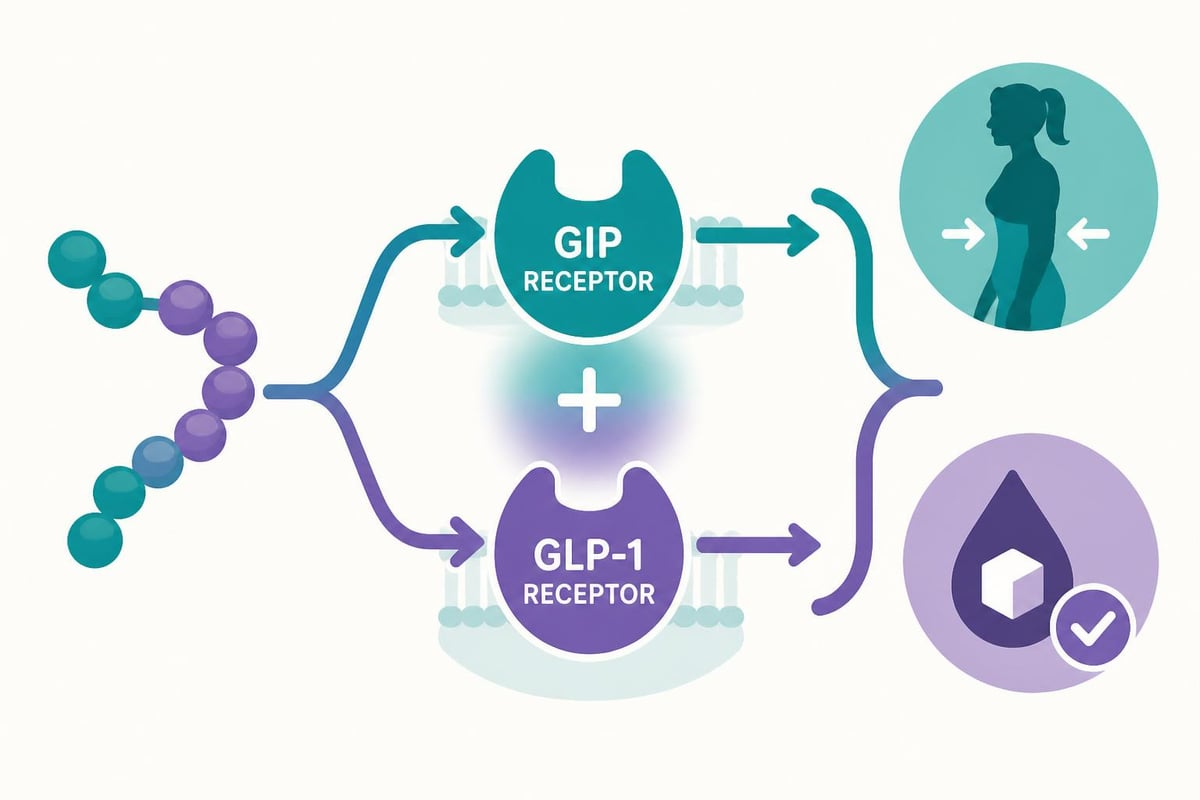
The peptide structure of tirzepatide incorporates strategic amino acid modifications that enhance its binding affinity to both receptor types. These modifications also extend the peptide’s half-life, allowing for less frequent administration compared to natural incretins.
Key structural features include:
The molecular engineering behind tirzepatide peptides reflects years of research into optimizing dual receptor activation while maintaining favorable safety profiles. According to comprehensive pharmacological reviews, these design elements contribute significantly to the peptide’s clinical efficacy.
Tirzepatide peptides have demonstrated substantial impact on body weight reduction through multiple complementary mechanisms. The appetite suppression effect occurs primarily through central nervous system pathways activated by GLP-1 receptor stimulation, while GIP receptor activation may influence adipose tissue function and energy expenditure.
Clinical observations throughout 2026 continue to reveal significant weight reduction outcomes when tirzepatide peptides are combined with lifestyle modifications. The magnitude of weight loss typically exceeds that observed with single-receptor agonists, highlighting the advantage of the dual mechanism approach.
Understanding how tirzepatide peptides compare to other weight management interventions helps contextualize their potential applications. Research data indicates superior weight reduction outcomes compared to traditional GLP-1 receptor agonists alone.
| Mechanism Type | Average Weight Loss | Duration | Primary Pathway |
|---|---|---|---|
| Dual GIP/GLP-1 | 15-22% body weight | 72 weeks | Combined incretin |
| GLP-1 Only | 10-15% body weight | 68 weeks | Single incretin |
| Lifestyle Alone | 3-5% body weight | 52 weeks | Caloric restriction |
The enhanced efficacy profile stems from the complementary actions of both receptor pathways working simultaneously. Those exploring weight loss peptide options should understand these mechanistic differences when evaluating potential protocols.
Implementing tirzepatide peptides requires careful attention to dosing escalation and individual response monitoring. The typical protocol involves gradual dose increases to optimize tolerance while achieving therapeutic benefits.
Starting doses generally begin at lower levels to assess individual tolerance and minimize potential gastrointestinal effects. Progressive titration occurs over several weeks, with dosing adjustments based on response and tolerability factors.
Administration occurs through subcutaneous injection, typically in the abdomen, thigh, or upper arm regions. Rotation of injection sites helps minimize local tissue reactions and ensures consistent absorption. Similar to protocols described for other peptide therapies, proper technique and storage procedures maintain peptide integrity.

Quality Considerations and Purity Standards
The efficacy and safety of tirzepatide peptides depend fundamentally on manufacturing quality and purity levels. Premium peptide suppliers implement rigorous quality control measures to ensure consistent potency and minimal contamination.
Critical quality parameters include:
Manufacturers committed to excellence provide certificates of analysis documenting batch-specific purity and composition data. This transparency allows researchers and practitioners to verify product quality before implementation.
Maintaining tirzepatide peptides in proper conditions preserves their biological activity throughout the product lifecycle. Lyophilized powder forms demonstrate superior stability compared to pre-reconstituted solutions.
Storage guidelines specify refrigeration between 2-8°C (36-46°F) for both lyophilized and reconstituted forms. Protecting peptides from light exposure and temperature fluctuations prevents degradation that could compromise efficacy. Once reconstituted, solutions maintain stability for defined periods when stored correctly, though exact durations vary based on formulation specifics.
While weight reduction represents a primary application, tirzepatide peptides influence numerous metabolic pathways with broader health implications. The dual incretin mechanism affects cardiovascular markers, inflammatory processes, and glucose metabolism independent of weight changes.
GLP-1 receptor activation contributes to improved endothelial function and reduced inflammatory markers associated with metabolic syndrome. GIP receptor stimulation may influence lipid metabolism and adipose tissue distribution, potentially offering benefits beyond simple caloric balance.
Research throughout 2026 continues investigating tirzepatide’s effects on comprehensive metabolic panels. Improvements observed across multiple biomarkers suggest systemic metabolic optimization rather than isolated weight reduction.
| Biomarker Category | Observed Effects | Clinical Significance |
|---|---|---|
| Glucose Control | HbA1c reduction 1.5-2.5% | Improved glycemic stability |
| Lipid Profile | Triglyceride reduction 20-30% | Enhanced cardiovascular markers |
| Blood Pressure | Systolic reduction 5-10 mmHg | Reduced cardiovascular strain |
| Inflammatory Markers | CRP reduction 30-40% | Decreased systemic inflammation |
These multi-faceted improvements demonstrate how tirzepatide peptides address underlying metabolic dysfunction through complementary pathways. Clinical analyses continue documenting these broader metabolic benefits as research expands.
Understanding the safety characteristics of tirzepatide peptides enables informed decision-making and appropriate monitoring during implementation. The most commonly reported effects involve gastrointestinal responses, typically transient and dose-dependent.
Nausea, occasional digestive discomfort, and appetite changes represent expected responses to incretin receptor activation, particularly during dose escalation phases. These effects generally diminish as adaptation occurs, though individual experiences vary considerably.
Comprehensive monitoring protocols track both therapeutic benefits and potential adverse responses throughout treatment duration. Regular assessment intervals allow for timely adjustments optimizing outcomes while maintaining safety.
Practitioners overseeing tirzepatide peptide protocols should maintain awareness of contraindications and situations requiring additional caution. Individuals with specific medical histories may require modified approaches or alternative interventions.

Maximizing the benefits of tirzepatide peptides requires integration within broader health optimization frameworks. While the peptides provide powerful metabolic support, synergistic lifestyle factors enhance outcomes substantially.
Nutritional strategies emphasizing protein adequacy, micronutrient density, and appropriate caloric intake complement the appetite modulation effects. The reduced hunger signals created by tirzepatide peptides provide an opportunity to focus on food quality rather than constant appetite management.
Physical activity protocols benefit from the enhanced energy availability and reduced metabolic stress associated with improved glucose regulation. Resistance training preserves lean tissue during weight loss phases, while cardiovascular exercise supports overall metabolic health.
Supporting practices include:
Those exploring comprehensive peptide strategies may also investigate recovery-focused compounds that complement metabolic optimization. The combination of metabolic support and recovery enhancement creates a robust foundation for sustained health improvements.
Scientific investigation of tirzepatide peptides continues expanding throughout 2026, with ongoing studies exploring additional applications and optimization strategies. Research into dosing variations, combination protocols, and long-term outcomes provides evolving insights.
Emerging areas of investigation include tirzepatide’s potential effects on non-alcoholic fatty liver disease, cognitive function markers, and inflammatory conditions beyond traditional metabolic parameters. These research directions suggest broader therapeutic applications may emerge as understanding deepens.
Current and planned studies examine tirzepatide peptides across diverse populations and clinical scenarios. This expanding evidence base will inform optimal implementation strategies and identify specific populations most likely to benefit.
The progression from early-phase research to real-world application demonstrates the peptide’s transition from experimental compound to established therapeutic tool. Researchers and practitioners can access current findings through databases and peer-reviewed publications tracking this evolving field.
Successfully implementing tirzepatide peptides requires attention to multiple practical factors beyond basic dosing protocols. Sourcing considerations, reconstitution procedures, and ongoing assessment strategies all contribute to optimal outcomes.
Selecting suppliers committed to quality standards ensures consistent product performance. Verification of purity through third-party testing, proper storage infrastructure, and transparent sourcing practices distinguish premium providers. Those seeking reliable sources should review available options offering documented quality assurance.
Proper reconstitution technique preserves peptide integrity and ensures accurate dosing. Using bacteriostatic water and gentle mixing methods prevents peptide degradation that aggressive handling might cause.
Following established protocols maintains peptide stability throughout the usage period. Questions regarding specific procedures can often be addressed through supplier support resources or consultation with experienced practitioners.
Outcomes with tirzepatide peptides demonstrate considerable individual variation based on genetic factors, baseline metabolic status, and concurrent lifestyle practices. Understanding this variability helps establish realistic expectations and appropriate monitoring intervals.
Some individuals experience rapid, substantial responses while others show more gradual improvements requiring longer observation periods. Factors influencing response patterns include insulin sensitivity, baseline body composition, dietary adherence, and genetic polymorphisms affecting receptor expression.
When initial responses fall below expectations, several adjustment strategies may enhance outcomes. Dosing modifications, timing alterations, and lifestyle factor optimization often improve results without abandoning the therapeutic approach.
Combining tirzepatide peptides with other complementary compounds represents another optimization avenue, though such combinations require careful planning and monitoring. Those interested in comprehensive approaches might explore muscle growth peptides or anti-aging compounds as part of broader protocols.
Tirzepatide peptides offer a scientifically-backed approach to metabolic optimization through their unique dual incretin mechanism, providing comprehensive support for weight management and overall metabolic health. The combination of GIP and GLP-1 receptor activation creates synergistic effects that extend beyond simple appetite suppression to address fundamental metabolic processes. For those seeking premium quality peptides backed by rigorous testing and quality assurance, Pure Peptide provides access to research-grade compounds supporting your health optimization journey with transparency and proven purity standards.